
journal no. 06notes
caring for fine leather goods
Good leather asks for very little. Less than most people give it.
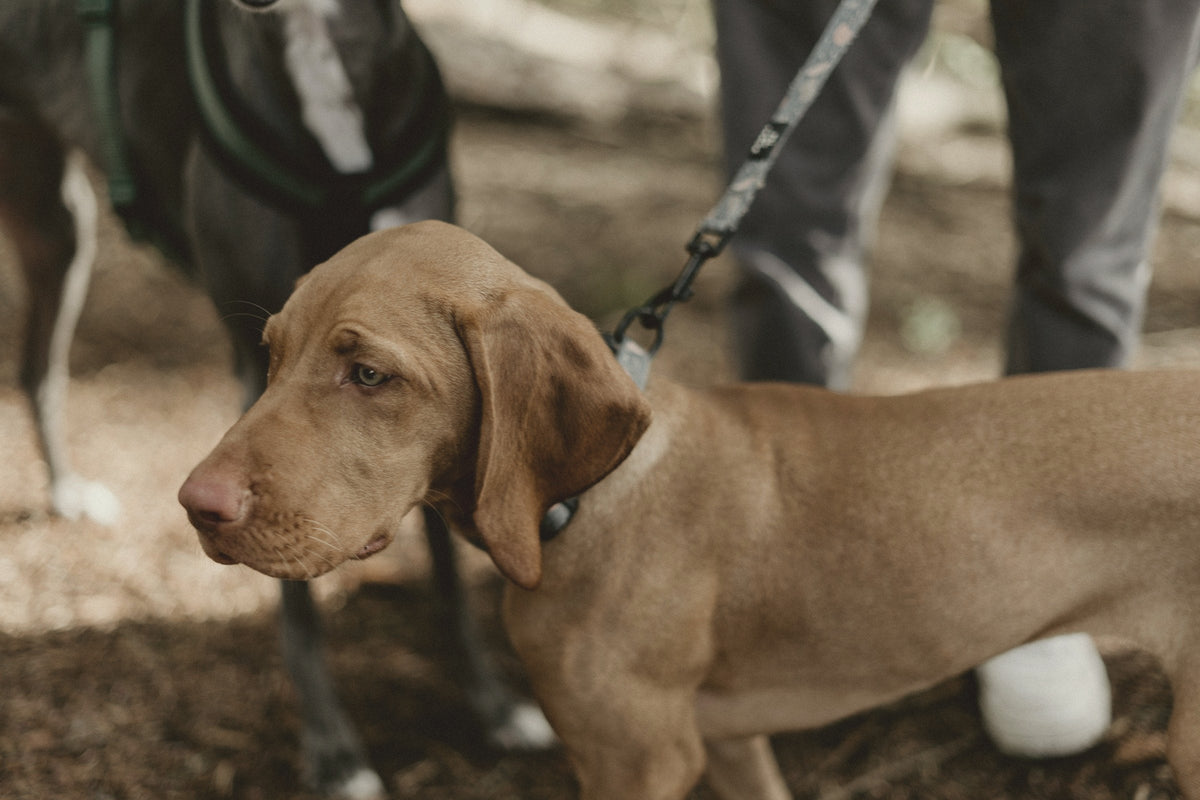
Good leather asks for very little. Less than most people give it.
The instinct is to polish, to oil, to treat. Often the better care is restraint. A soft cloth. A cool, steady room. Time. What follows is a short method for the leather in a dog's life, and in yours.
first, know what you have
Leather is not one material. Vegetable-tanned leather is often finished with an open surface that absorbs oils and wax through use, which is how it develops patina; pigment-finished leathers carry a surface coating and behave differently (Gentleman's Gazette). Suede and nubuck have a raised nap and need dry methods only.
So begin with the maker's instructions. Cleaning guidance from Country Living, drawing on professional cleaners, puts this first: consult the item's care instructions before cleaning any leather good (Country Living). When in doubt, test any product on a hidden area before using it on the surface (Galen Leather).
a note specific to dogs
A collar or lead is not a handbag. It sits against skin and fur, and it finds its way into mouths.
The American Kennel Club advises against using furniture or shoe leather cleaners on a dog collar, because their chemicals can be toxic to dogs (American Kennel Club). Choose products made for leather that will be handled and worn, use them sparingly, and buff away any residue completely. If you are unsure whether a product is safe around your dog, ask the maker or your veterinarian.
see collars & leads in the edit
the everyday wipe
Most care is simply this.
- Brush. Remove dust and grit with a soft brush. Horsehair is the traditional choice (Country Living). Grit is abrasive. It wears the grain if left.
- Wipe. Use a soft cloth, barely damp. Many care guides suggest distilled water, to avoid leaving mineral marks (Country Living).
- Dry. Let it dry fully, at room temperature, before use or storage.
For a collar after a muddy walk, that is usually enough. Wipe, then hang it where air moves around it.
when it gets wet
Rain, a river, a puddle chosen with intent. It happens.
Blot away standing water with a soft cloth. Do not rub. Then let the leather dry slowly, away from radiators, fires, heated floors and sun. The Canadian Conservation Institute warns that locally elevated temperatures, such as a spot near a radiator, can accelerate deterioration of leather through drying and protein damage (Canadian Conservation Institute).
A hair dryer is not a shortcut. Patience is.
Once fully dry, the leather may feel a little stiffer. Flex it gently in the hand. If it still feels dry, a very small amount of conditioner can help.
conditioning, sparingly
Conditioner restores some of the oils that leather loses through use and drying. It is useful. It is also easy to overdo.
Conservation practice is instructive here. The Canadian Conservation Institute notes that current museum practice is to minimize dressings, lubricants and cleaners on leather because of their negative long-term effects, and to focus instead on proper storage environments (Canadian Conservation Institute). Everyday goods are not museum pieces. They are flexed, worn and rained on, and they benefit from occasional care. But the principle holds: less, and less often.
A sensible rhythm for most daily-use leather is every few months, adjusted for how dry it feels and how much weather it sees. Some care guides suggest every three to six months (Lebanon Leatherwork).
To apply:
- Clean first. Conditioner over grit seals the grit in.
- Use a pea-sized amount on a soft cloth, not on the leather directly.
- Work it in thin, even circles. Edges and folds first, where leather flexes most.
- Leave it to absorb. Then buff away any excess with a clean cloth.
Vegetable-tanned leather may darken slightly when conditioned. Test first on a hidden area.
light and patina
Vegetable-tanned leather changes with light, oils from the hand and handling, darkening and softening into patina (Priestleys). This is welcome. Uneven change is less so. Long periods in direct sun can fade or darken a surface unevenly (Priestleys).
A collar worn every day ages evenly with the dog. A lead left in a sunny window ages on one side. Hang it where light is soft.
storage
The room matters more than the product.
The Canadian Conservation Institute recommends a stable relative humidity of 45 to 55 percent and a temperature of 18 to 20 degrees Celsius for leather (Canadian Conservation Institute). It notes that very dry air, below 30 percent, causes embrittlement, while humidity above 65 percent encourages mold, and that fluctuations can progressively harden vegetable-tanned leather (Canadian Conservation Institute). It also advises keeping leather out of direct sunlight (Canadian Conservation Institute).
In a home, that translates simply. A closet, not an attic or basement. Not beside a heating vent. Air that moves.
For pieces put away for a season:
- Clean and dry them first.
- Store in a breathable cotton or linen bag, not plastic, which can trap moisture (Lebanon Leatherwork).
- Lay collars flat or hang them loosely. Do not coil tightly or crease.
- Keep them apart from hardware of other pieces that might scratch.
hardware
Wipe buckles and rings dry after wet walks. Solid brass will darken over time, which many prefer to leave. Stainless steel stays bright (Leathercraft Haven). If you polish metal, keep polish off the leather, and check that it is safe for use near your dog.
Every so often, look closely at stitching near rings and buckles. These are the points of greatest strain on a collar. A loose stitch caught early is a small repair. Ask the maker.
when to retire a collar
Leather lasts a long time when cared for. It does not last forever. Retire a collar or lead if you see cracking that runs through the leather, stitching that has failed at a load point, or hardware that has bent or opened. A dog's safety matters more than any object.
in short
Brush and wipe. Dry slowly, away from heat. Condition rarely and lightly, with products safe around dogs. Store in steady, moderate air, in cloth, out of the sun. Check the stitching.
Then wear it. Leather is made to be used. Care is how it keeps getting better.
wagl is an independent house of curation and is not affiliated with any brand or organization mentioned here. This guide is general information; always follow the maker's care instructions for each piece.