
journal no. 05notes
gifting for the dog who has everything
There is a particular household. The dog has a bed in every room. A collar for the city and one for the country. Toys in a basket, mostly ignored. The owner has, quite reasonably, stopped buying more.
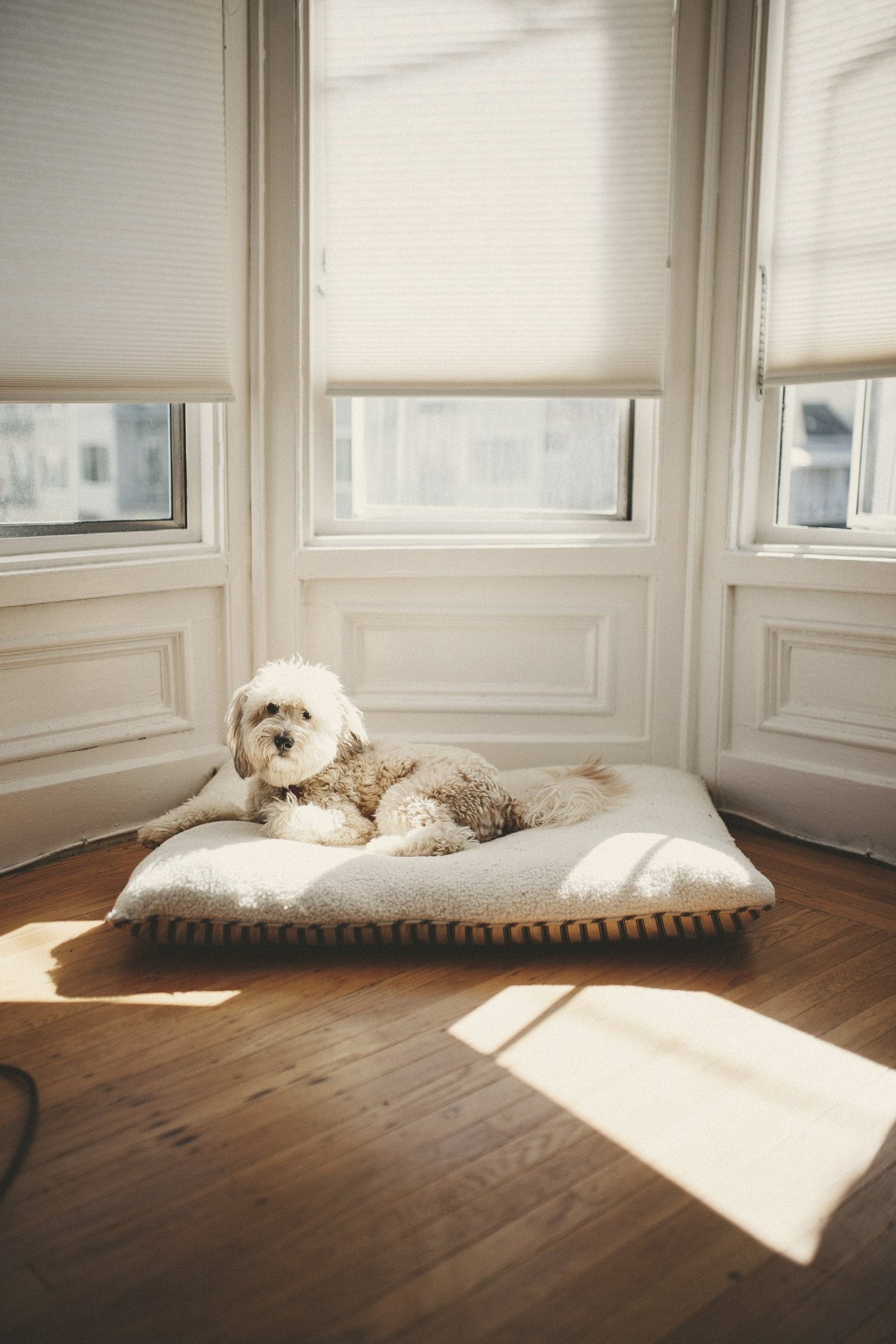
There is a particular household. The dog has a bed in every room. A collar for the city and one for the country. Toys in a basket, mostly ignored. The owner has, quite reasonably, stopped buying more.
Gifting here is not about adding. It is about choosing one thing that is better than what came before, or more personal, or simply more considered. A replacement, not an addition.
A few thoughts on how to do it well.
begin with what is used
The best gift improves something the dog already uses every day.
Look at the collar and lead. Are they worn soft at the edges, or simply worn out. Look at the bowls. The bed. The blanket in the back of the car. Daily objects are where quality is felt most often. A lead held twice a day for a decade is touched thousands of times.
Ask the owner, lightly, what their dog loves. The answer is usually specific. A particular corner. A certain walk. A habit of resting a chin on the arm of the sofa. Begin there.
see collars & leads in the edit
see bowls & dining in the edit
make it personal, not loud
Personal does not need to mean monogrammed in large letters. It can be very quiet.
- A name engraved inside a tag, rather than across it.
- Initials blind-stamped into leather, visible only in raking light.
- A collar color chosen to sit well against a particular coat.
- A bed covering that matches the room the dog actually sleeps in.
Identification is the most useful personal detail of all. The American Kennel Club calls the collar and ID tag a dog's first line of defense against being lost, and recommends identification be worn whenever it is safe to do so, alongside a microchip (American Kennel Club). An engraved tag with a current number is a gift that may one day matter more than any other.
gifts for the person, through the dog
Sometimes the dog has everything because the owner already gives it everything. The gift can be for them.
- A care ritual. A small set of leather balm, a soft brush and a cloth, for the collars and leads they already treasure. See our note on caring for fine leather goods.
- A travel piece. A leather folio to keep vaccination records and travel documents together. Anyone who has flown with a dog knows the value of having every certificate in one place. Our guide to traveling privately with your dog explains why.
- Something for the hallway. A lead hook, a basket for walking things, a tray by the door.
- A blanket. Wool, generous, washable. For the car, the sofa, the dog and the person beneath it.
if you do not know the dog well
Do not guess at size. Clothing and collars depend on exact fit; the AKC advises measuring with a soft tape rather than relying on size labels, and checking that two fingers slide beneath a collar (American Kennel Club). Without that information, choose something that does not need it.
Bowls, blankets, care sets, lead hooks and travel pieces are forgiving. So is a gift card presented properly, with a handwritten note.
Consider age as well. For a young puppy who will outgrow things in weeks, the AKC suggests that a more expensive leather collar may not be the right purchase yet (American Kennel Club). A blanket or bowl will last into adulthood. For an older dog, comfort often matters most. A supportive bed may help relieve the discomfort of age-related joint conditions (American Kennel Club).
a word on wrapping
The holidays bring hazards along with the ribbon. The American Veterinary Medical Association lists tinsel, ribbons and other decorative materials among the things pets may play with or eat, which can cause choking or intestinal blockage (AVMA). It notes that sparkly packaging left in the trash can tempt pets as well (AVMA).
So wrap simply. Heavy paper, a cotton tie, no loose curls of ribbon. Open gifts with the dog nearby but not underfoot, and clear the paper away promptly.
and on treats
Edible gifts need particular care. The AVMA advises keeping all chocolate away from pets, warns that sweets and baked goods may contain xylitol, which has been linked to liver failure and death in dogs, and lists onions, raisins and grapes as poisonous to pets (AVMA). VCA Animal Hospitals adds that dogs can smell chocolate even through wrapping, and advises against leaving wrapped edible gifts under the tree (VCA Animal Hospitals).
If you give a treat, give one made for dogs. Place human gifts of food high and out of reach. The AVMA also lists poinsettia, amaryllis, mistletoe and holly among holiday plants that can be dangerous if eaten (AVMA). Choose flowers for a dog's household with that in mind.
the presentation
How a gift arrives is part of the gift.
A box that opens cleanly. Tissue rather than plastic. A card with the dog's name written by hand. Nothing that rattles with packaging. The pleasure is in the lifting of the lid and the weight of the thing inside.
If you would like help choosing, our concierge is glad to help.
in short
Improve something the dog uses daily. Personalize quietly. When unsure of size, choose something that does not need one. Wrap without ribbon and keep treats meant for people out of reach.
The dog who has everything does not need more. It needs one thing, chosen well.
wagl is an independent house of curation and is not affiliated with any brand or organization mentioned here. Safety guidance summarized here is general information; consult your veterinarian with specific concerns, and in an emergency contact your veterinarian or an animal poison control service immediately.