
journal no. 10bowls
on bowls: weight, height and material
A bowl is set down twice a day for the whole of a dog's life. It may be the most used object in the kitchen.
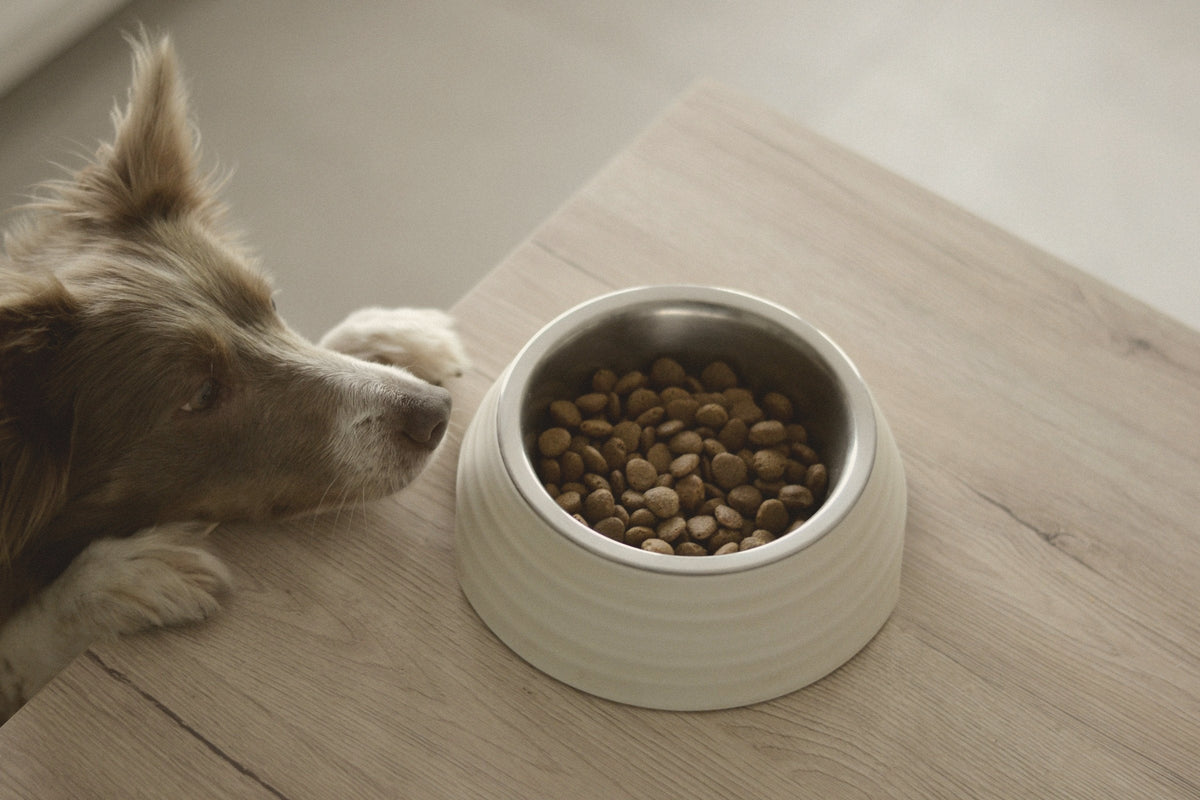
A bowl is set down twice a day for the whole of a dog's life. It may be the most used object in the kitchen.
It deserves a little thought. Not for ornament, though a good bowl is quietly beautiful. For three plain things: what it is made of, how high it stands, and how much it weighs. Then one more, less glamorous: how it is washed.
material
Stainless steel is where most professionals begin. The Whole Dog Journal calls it the first choice of most breeders and handlers: durable, easy to clean, non-reactive with food and water, and impossible to chew (Whole Dog Journal). Veterinarians quoted by the American Kennel Club recommend it for being dishwasher-safe and non-porous, holding odors and bacteria less than plastic (American Kennel Club). A heavy-gauge stainless bowl, well finished, is a fine object in its own right — in the edit, see the Michael Aram dog bone bowl, its matching dog bone canister, and the dog scoop.
Ceramic, stoneware and porcelain bring weight, color and a calm, glazed surface. They ask for more care in the choosing. The FDA explains that some glazes contain lead, and that if pottery is not properly made and fired, lead can leach into what it holds (FDA). The agency advises particular caution with pottery that is antique, damaged or excessively worn, of uncertain origin, or brightly decorated in orange, red or yellow (FDA). The Whole Dog Journal suggests choosing stoneware or porcelain fired at high temperatures, from makers who can certify their glazes as food safe, and retiring any bowl whose glaze turns chalky or corroded (Whole Dog Journal).
So ask. Where was it made? Is the glaze food safe, and tested? Is the inside glazed fully, with no raised decoration where glaze may thin? A maker who knows the answers will give them readily — such as Wedgwood's Florentine bone china pet bowl, made in England and dishwasher safe. Ceramic can also chip or crack if dropped, and bacteria can hide in the damage (American Kennel Club). A chipped bowl is retired, not kept for sentiment.
Plastic is light and inexpensive. It is also the material the sources are most cautious about. The Whole Dog Journal advises against plastic for dogs who chew, and against using it with very hot food or water (Whole Dog Journal). It has little place in a considered kitchen.
Stone, crystal, wood and other materials appear in design-led bowls. Often the food-contact surface is a stainless or ceramic insert set into the outer base, as in the Baccarat Louxor crystal pet bowl, where a removable stainless steel bowl sits inside diamond-cut French crystal. That is a sensible arrangement: the outer material for weight and beauty, the inner for hygiene. Ask which surface touches the food.
see bowls & dining in the edit
height
Raised feeders are often presented as a kindness, especially for large dogs. The evidence is less simple.
The most cited study is a prospective cohort of large and giant breed dogs in the United States, published by Glickman and colleagues in 2000. It found that feeding from a raised bowl was associated with a significantly higher risk of gastric dilatation-volvulus, the life-threatening condition known as bloat. The adjusted relative risk was roughly double (Edinburgh Research Explorer, Veterinary Evidence review). A later review of the evidence notes the study's limits: bowl height was recorded near the start and not updated, so the researchers could not be sure how each dog was fed when bloat occurred (Edinburgh Research Explorer, Veterinary Evidence review).
An association is not proof of cause. But for large and giant deep-chested breeds, the available evidence does not support raising the bowl as a preventive measure. Some dogs do need a raised bowl, for reasons of age, joints or particular medical conditions. That is a decision for your veterinarian, not for a catalog.
For most dogs, a bowl on the floor, on a mat or low tray that keeps it still, is the plain and sensible choice.
weight
Weight is underrated.
A light bowl travels. It slides across tile as the dog eats, rings against the cabinet, tips when a paw lands on the rim. A heavy bowl stays where it was set. It makes the meal quieter. That stillness is the whole luxury of the thing.
Look for:
- A wide, stable base. Wider at the floor than at the rim.
- Real mass. Stoneware, porcelain, heavy-gauge steel, or a crystal, stone or weighted base.
- A non-slip foot or mat. Silicone or rubber underneath, or a tray that holds the bowl in place.
- The right size. Deep enough to hold a meal without spilling; wide enough that a dog with a broad face or long ears can eat comfortably.
washing
Here is the unglamorous part. It matters most.
The FDA recommends washing a pet's food bowl and scooping utensils with soap and hot water after each use, washing hands before and after handling pet food, and not using the bowl itself as a scoop (American Kennel Club). Veterinarians quoted by the American Kennel Club recommend washing food and water bowls daily, to keep a bacterial film called biofilm from building up (American Kennel Club).
Few households know this guidance. In a 2022 study published in PLOS ONE, fewer than 5 percent of surveyed dog owners were aware of FDA pet food handling and bowl hygiene guidelines. When owners followed them for a week, contamination on the bowls fell significantly, and a hot-water wash or dishwasher cleaned better than cold or lukewarm water (PLOS ONE, via PubMed Central).
Material alone does not keep a bowl clean. A separate study of 96 dog bowls found higher bacterial counts on the metal bowls sampled than on the plastic ones, with the authors noting that steel grade, surface finish and age all affect how well a bowl can be cleaned (PubMed Central). The lesson is not to avoid steel. It is that washing matters more than what the bowl is made of.
So:
- Wash food bowls after each meal, in hot soapy water or a dishwasher, if the maker allows.
- Wash water bowls daily. Refill with fresh water, not on top of old.
- Keep a separate sponge or brush for the dog's bowls.
- Own two sets, so one is always clean.
Check the maker's care notes before the dishwasher. Some glazes, metallic finishes and crystal or stone bases prefer the hand.
in short
Stainless or fully glazed, food-safe stoneware or porcelain, from a maker who can say where and how it was made. On the floor, unless your veterinarian advises otherwise. Heavy enough to stay still. Washed after every meal.
A bowl that is right is never noticed. The dog eats. The room stays quiet.
see bowls & dining in the edit · see the full edit
wagl is an independent house of curation and is not affiliated with any maker, brand or organization mentioned here. Some retailer links on wagl may earn us a commission; see our affiliate disclosure. This guide is general information, not veterinary advice; ask your veterinarian about feeding height and diet for your dog.